
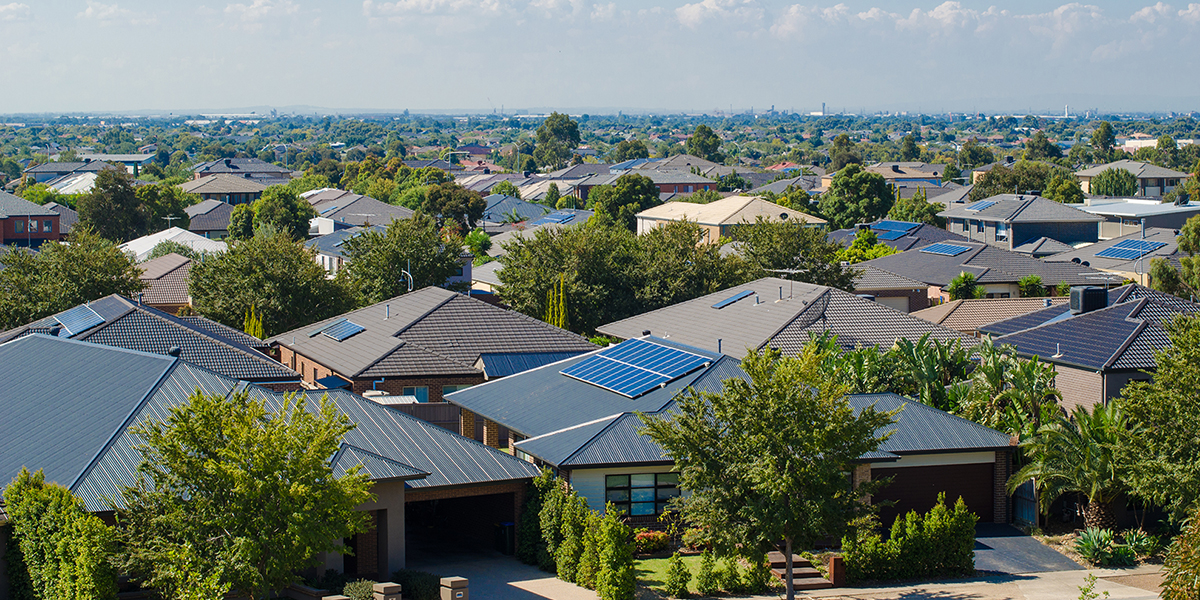
There are a number of ways Australians can use their super to buy property.
This guide explains the different ways to buy a home using super, the rules you need to follow, and the advantages and disadvantages of each option.
Can you use super to buy a house?
Yes, you can use money in your super to buy a house if you fit within one of the following three groups:
1. You’re a first-home buyer using the First Home Super Saver (FHSS) scheme.
This Australian Government initiative allows you to make voluntary contributions into your super fund, then withdraw those contributions (along with associated earnings) to help buy your first home, while benefiting from concessional tax treatment.
2. You have a self-managed super fund (SMSF) and plan to purchase an investment property.
This allows you to invest your retirement savings in residential investment property or commercial property, provided the investment is maintained solely to provide retirement benefits for fund members. There are currently 663,867 SMSFs in Australia.
3. You have reached preservation age.
This is the earliest age at which you can generally access your super, provided you also meet a condition of release. In Australia, preservation age ranges from 55 to 60, depending on your date of birth. Once you’ve reached your preservation age and retired (or turned 65), you can use your super for any purpose, including buying a home, renovating a property or paying off an existing mortgage.

How to buy a home through the FHSS scheme
The First Home Super Saver (FHSS) pathway is becoming increasingly popular among first-home buyers. In the 2024–25 financial year, there were 18,300 release requests under the scheme, with 15,200 payments made to individuals, totalling $303.6 million.
The FHSS allows first-home buyers to make voluntary contributions to their superannuation, up to $15,000 per year and up to $50,000 cumulatively across all years.
Using salary sacrifice, you can contribute pre-tax income at a concessional tax rate of 15% towards super savings. This can reduce the tax you pay on your contributions, and help you build your deposit faster. You can also add post-tax non-concessional contributions.
When you withdraw eligible FHSS funds to buy your first home, the amount is taxed at your marginal tax rate, but you receive a 30% tax offset.
To be eligible for the FHSS, you must:
be aged 18 or over
have never owned property in Australia (including investment properties, commercial properties, vacant land, lease of land, and company title interests in land)
list your name on the title of the property you buy
have no completed release request in a FHSS determination made in relation to you
sign a contract to build or purchase a home within 12 months of requesting release of funds
notify the ATO within 28 days of signing a property purchase contract.
How to access your FHSS funds
When you’ve saved enough to put towards a house deposit, you can log into the Australian Taxation Office (ATO) through myGov and apply for your FHSS determination.
The ATO will calculate the maximum withdrawal amount. The releasable amount usually includes:
100% of non-concessional contributions
85% of concessional contributions
the amount of earnings associated with these contributions.
Once you receive your determination, you can request a formal release of funds through the ATO. It will automatically withhold the appropriate amount of tax. This is based on either
your expected marginal tax rate (including Medicare levy), minus a 30% offset
17%, if the ATO can’t estimate your expected marginal rate.
The ATO will also offset the release against any outstanding debts with the ATO or another Commonwealth agency.
Pros & cons of using the FHSS to buy a house
Pros | Cons |
Voluntary concessional contributions are generally taxed at 15% in super, with a 30% tax offset applying when eligible funds are released. | Released FHSS funds count towards your taxable income, which may increase compulsory student loan repayments. |
The $15,000 annual and $50,000 lifetime limits apply per person, meaning eligible couples can effectively double the amount they save. | Accessing your money through the ATO can take 15–25 business days. If you sign a contract prior to requesting release, you may incur penalty tax if funds are not accessible in time. |
The ATO applies a deemed earnings rate to your contributions, which can work in your favour if your super investments underperform. | The contribution limits mean the scheme may only fund part of your required deposit. |
Keeping your savings in super reduces the temptation to spend them before buying. | If you decide not to purchase a home, your FHSS contributions generally remain in your super until you meet a condition of release, like retirement or compassionate grounds. |


Purchasing a home through a self-managed super fund (SMSF) is limited to investment properties, including commercial premises.
However, under new rules announced in 2026, SMSFs will no longer be able to use Limited Recourse Borrowing Arrangements (LRBAs) to borrow money to purchase new residential investment properties.
Existing borrowing arrangements will be grandfathered, and SMSFs can still purchase property using available cash. SMSFs can still borrow money to buy commercial property.
To be eligible to buy property under your SMSF, you must:
meet the sole-purpose test of solely providing retirement benefits to fund members (i.e. the investment is maintained solely to provide retirement benefits to fund members)
not be acquired from a friend, relative, business partner or other related party to a fund member
not be lived in or rented by a fund member or related party.
If the property is a commercial property, the premises may, in some cases, be leased to a fund member, but strict criteria apply.
In order to purchase a property through a SMSF, you will need to set up a bare trust and register a trustee company.
Investment income earned by a complying SMSF is generally taxed at a concessional rate of 15% while the fund is in the accumulation phase. If the property is sold after being held for more than 12 months, the effective capital gains tax rate is reduced to 10%. Once the property is supporting retirement-phase pensions, rental income and capital gains may be tax-free.
Pros & cons of using your SMSF to buy property
Pros | Cons |
Tax benefits apply for rental income, with rent received taxed at a lower rate of just 15%. | SMSFs can no longer borrow money to buy new residential investment properties, meaning you’ll generally need sufficient funds in your SMSF to buy outright or invest in commercial property if borrowing is required. |
If a property is held for more than 12 months, the SMSF may qualify for a one-third CGT discount, reducing the effective tax rate on capital gains from 15% to 10%. | Establishment, accounting, auditing, legal, property management and loan costs (where applicable) can run into the thousands of dollars each year. |
Property can diversify your retirement savings and provide long-term capital growth and rental income. | SMSFs must comply with superannuation laws and ATO requirements, with significant penalties for breaches. |
How to buy a home with your super when you retire

If you’ve reached preservation age and meet a condition of release (e.g. you’re retiring), you can access your super and use the money however you choose, including to pay off your existing mortgage, buy another home or renovate.
To access your super, you generally need to:
have reached your preservation age and permanently retired, or
have turned 65, regardless of whether you’re still working.
You can withdraw your super as a lump sum or, if eligible, receive regular payments through a transition to retirement (TTR) income stream or an account-based pension.
The tax treatment depends on how and when you access your super. If you’re aged 60 or over and withdraw benefits from a taxed super fund, lump sum withdrawals are generally tax-free. If you’re receiving a TTR income stream before fully retiring, different tax rules may apply, including a 15% tax offset in some circumstances if you’re under 60.
Pros & cons of using super to buy a house at retirement
Pros | Cons |
Once super is released after retirement, there are generally no restrictions on the type of property you can buy or who can live in it. | Older Australians may find it more difficult to get a mortgage, as lenders may be concerned about their long-term ability to service the loan. |
Using super may allow you to buy a property outright or contribute a larger deposit to reduce your LVR (and get a better interest rate). | If you buy an investment property outside super, you may pay tax on any rental income and capital gains personally. |
Super can also be used to renovate or pay off an existing property. | Money withdrawn from super to buy property will no longer be available to fund living costs, healthcare or other retirement expenses. |