
Wondering how to save for a house deposit in 2026?
Saving for a house deposit in 2026 requires a strategic savings plan, designed to cut excess costs, make the most of financial support schemes, and utilise all available funds from a variety of sources including superannuation, high-interest accounts and other channels.
In Australia’s highly competitive property market, it can be difficult for new buyers to secure the deposit needed to break in. This can be a disheartening experience, even making the dream of owning a home feel out of reach. The good news is that it is possible to save enough money to buy a house in 2026.
So where do you begin? How do you really save for a house deposit in Australia in 2026? Here’s what you need to know.
How to Save for a House Deposit in Today’s Market
A house deposit isn’t a one-size-fits-all solution. Deposit values can vary greatly depending on a variety of factors, from location to property size and features to the lender you decide to work with.
You can enhance your savings plan using a range of strategies. You might be able to use your superannuation or earn extra interest with a dedicated savings account. You may even use an exchange-traded fund (ETF) to pool money towards your deposit amount.
Regardless of how much your deposit needs to be, there are a few things you can do to improve your savings results and more easily reach your goal.
Make the Most of Government Grants
In Australia, there are a number of government grants and schemes available to make saving for a first home easier.
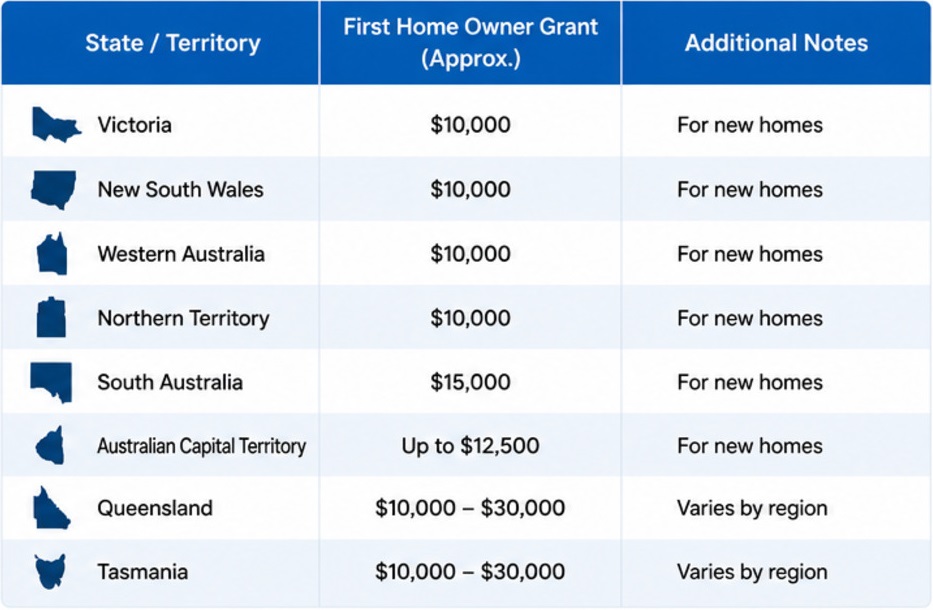
For instance, the first homeowner grant is administered across Australia by state governments. Available to first-time buyers who want to purchase or build a property to live in, this grant is provided as a one-off payment towards the purchase of a new home.
There are some differences from state to state. Eligible properties may vary, as may grant value. For example, in Victoria, Western Australia, New South Wales, and the Northern Territory, the first homeowner grant is usually $10,000. In South Australia, the grant value is $15,000. In the Australian Capital Territory, grant values may be up to $12,500. In Queensland and Tasmania, grants can range from $10,000 to $30,000.
In many cases, eligibility for the first homeowner grant also opens up other government schemes, including stamp duty exemption, which can lead to significant savings during the purchasing and settlement process.
There are other options available too. Some buyers may be able to access the Housing Australia Guarantee, which includes the Australian Government’s 5% deposit scheme. Under this scheme, eligible buyers are able to secure home loans with only a 5% deposit (or 2% for single parents), rather than the usual 20% minimum, all without needing to pay for lenders mortgage insurance (LMI).
These grants are generally deposited at settlement. However, you will still need to prove to your lender that you have a minimum deposit available ranging anywhere from 5% to 20%, depending on the loan deal you’re pursuing.

As you begin saving for a house deposit, find out what government supports are available based on your location and services. This information can help guide your savings goals and may even reduce the amount you need to save before purchasing your new home.
Find Ways to Increase Your Earnings and Reduce Costs
The simplest way to boost your savings is by increasing income and reducing outgoings as much as possible. This will look different depending on your own situation and what supports are available to you.
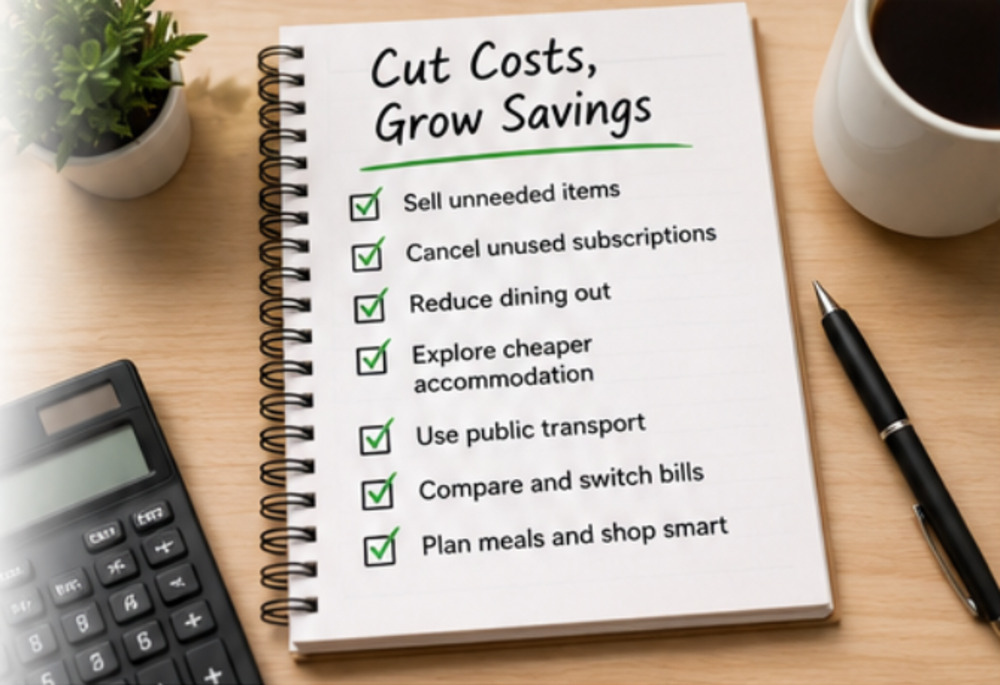
When saving for a house deposit, you might begin to explore additional earning pathways. This might mean taking on more hours at work or exploring a lucrative side hustle. Alternatively, you might decide to sell unneeded belongings ahead of your eventual purchase and move.
It’s a good idea to carefully examine your existing budget and identify areas where you could save more productively. Are you currently paying for several streaming subscriptions, or do you often dine out? There are easy areas to cut back and see savings fast.
For some would-be homebuyers, cutting costs may require a more extreme solution. If you’re currently paying high amounts in rent, consider whether you have any friends or family you could stay with while you save.
There are other options you can pursue to earn a little extra income, even while working fulltime. For instance, the Containers for Change program allows you to earn 10 cents for the return of every eligible drink container. That might not sound like much, but it can add up quickly when you’re consistent.
You can also increase your interest earnings by placing your money in a high-interest savings account or even exploring smart investment options.
Finally, if you have existing debts, it can be helpful to consolidate these and work towards paying them off. This can help you avoid paying more interest than necessary, and it will also improve your credit score, ultimately enhancing your borrowing power when you’re ready to secure a loan.
What a Good Savings Plan Looks Like
The key to effective saving is having a strong plan.
Whenever possible, look for ways to make saving automatic. Set up an automatic transfer that puts a portion of your pay directly into a dedicated savings account. This can help to reduce the temptation to spend, allowing you to build your savings more quickly.
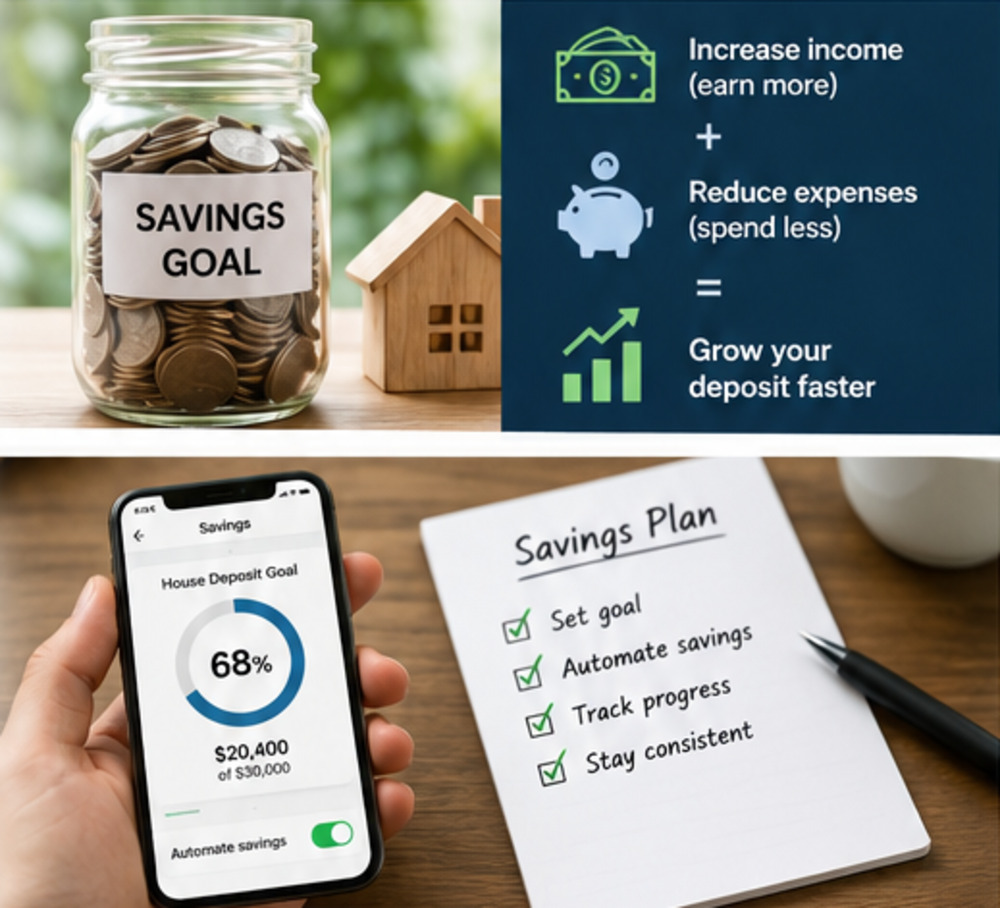
It can also be helpful to consider where you keep your savings. A high-interest savings account is a strong choice, offering bonuses when you continually add to your savings without making withdrawals.
You may also look to outside resources for savings help. For instance, the Australian Government’s First Home Super Saver Scheme allows you to voluntarily contribute up to $15,000 towards your superannuation fund every year, making the most of super-associated tax benefits. When you’ve saved enough, you can withdraw up to $50,000 towards your first home deposit.
If you’re renting, a good rule of thumb is to try to save around 15% of your income each fortnight or month (whatever is in line with your pay cycle). That could be 15% each, or a combined savings target if you share finances with your partner. That means putting aside 15 cents from every dollar you earn. It still leaves room for dinners out or unexpected expenses without completely putting your life on hold.
Set up an automatic transfer for the day you get paid. That way, the money goes straight into your savings account before you have a chance to spend it.
If you’re still living at home, aim to save 20% of your income or more. That will fast-track your deposit savings.
Here’s what a house deposit savings plan could look like for someone earning $95,000 a year:
Annual income | Savings rate | Monthly savings | Annual savings | Savings after 3 years |
$95,000 | 15% | $1,188 | $14,250 | $42,750 |
$95,000 | 20% | $1,583 | $19,000 | $57,000 |
If your budget for a house or unit is $800,000, you’d only need a $40,000 deposit under a 5% deposit scheme. Those numbers show it’s realistic to build a deposit within three years with a minimum 15% savings rate.

You could end up with even more if your savings are sitting in a high-interest savings account earning interest or in an ETF. Likewise, it’s a good idea to put tax refunds, work bonuses and other windfalls straight into your deposit fund.
You may also look to outside resources for savings help. For instance, the Australian Government’s First Home Super Saver Scheme allows you to voluntarily contribute up to $15,000 towards your superannuation fund every year, making the most of super-associated tax benefits. When you’ve saved enough, you can withdraw up to $50,000 towards your first home deposit.
Common Mistakes Among New Buyers
As you save for your home, it’s important to avoid the pitfalls.
Many buyers make the mistake of forgetting that property costs go beyond the deposit amount. In addition to your house deposit, you’ll need to have enough funds to cover all relevant legal and conveyancing fees, as well as any building inspections, transfer fees, or moving costs.

Find out exactly what costs you’re facing ahead of time. This way, you can budget accordingly and avoid nasty surprises.
It’s also essential that you show your savings and avoid taking out new personal loans or credit cards. These are important considerations for many lenders and may influence your borrowing power.
Before granting a loan, most lenders will want to see your track record for saving to ensure that you’re not relying on borrowed funds. They’ll also want to know what other debts you have and how you service them so that they can verify your ability to meet minimum repayments over time.
Likewise, it’s important to ensure that you always read fine print carefully. Don’t trust a contract to have your best interests at heart. Look closely at all legal documents, and carefully review the key terms and conditions so that you know exactly what you’re signing up for.
That’s not all. Many buyers make the mistake of taking the wrong advice. Parents and family members can offer emotional support, but they are rarely the best source for clear, up-to-date information on the property market. Instead, it’s always best to work with a skilled and experienced broker who understands the legal requirements and nuances of home loans today.
One of the most common is putting every dollar into the deposit and costs and having nothing left for the first few months. Our cash left after buying calculator shows what would still be in your account after settlement.
What the Experts Recommend
When it comes to saving for a house deposit, most experts recommend one thing: consistency.
Saving enough to cover a deposit will take time, so you need to be committed to your goal. Set clear goals, and take actionable steps towards them.
Determine how much you will need to save by estimating your property price, adding purchasing costs, and subtracting the total amount you expect to borrow. Then work steadily towards saving this amount in deposit, plus a little extra to cover you for unexpected costs.
Set a budget that is realistic and achievable based on your circumstances. That might mean allocating all of your income to clearing your debts before actively building a savings fund. Alternatively, you might prefer to split your after-tax income so that at least 20% always goes straight towards repaying debts and saving.
Eventually, a strategic savings plan will lead you towards financial growth, and you’ll slowly approach your goal. Not only can this approach help you get into the property market; it can also help you more confidently keep up with mortgage repayments after purchasing.


James specialises in helping property investors accelerate their investment growth by utilizing modern technology to identify high-growth suburbs and optimise loan structures. Through the Property Surfer Program, clients can save on home loans, set up optimal property purchase structures, access top-tier market data, and benefit from automated loan repricing every three months. The services also focus on asset protection and risk minimization to ensure the best outcomes for clients.
Since 2017, James has been dedicated to enabling property investors to scale their portfolios and make data-driven investment decisions. By engaging with James, clients benefit from not only their expertise but also a network of top referral partners in financial planning, accounting, conveyancing, family law, and building inspections. Together, they aim to achieve greater growth and freedom in the property investment journey.

Free download
The First Home Buyer’s Complete Guide
40 pages covering every step from checking your credit file to collecting the keys. Tell us where to send it.