

Last reviewed November 2026 by Megan Birot, Content Editor, OurTop10. Figures checked against the sources named in the article.
What changed (23 November 2026): New guide. Parental Leave Pay figures use the 2026–27 rate. The lender table only lists the 7 lenders whose policies we could confirm on their own sites or broker guides, each linked.
Key points
- Most major lenders accept your return-to-work income if your leave is 12 months or less and you have an employer letter.
- Government Parental Leave Pay is $1,004.70 a week before tax for up to 26 weeks, well below most salaries, so the lender’s policy on which income it counts matters.
- Many lenders want savings (or leave pay) to cover the shortfall until you return. A $1,000 a month gap over six months means holding at least $6,000.
- The best time to refinance is before you go on leave, while your full income still shows on your payslips.
Jump to: Leave entitlements · Refinancing on leave · Buying your first home · 7 lenders compared · Easing repayments · FAQs · Sources

Yes, you can refinance or buy a home while you or your partner is on parental leave. Lenders will assess your serviceability (your ability to make repayments) on either your leave income or, more often, the salary you’ll earn when you go back to work, as long as you can show a confirmed return date and enough savings to cover any shortfall while you’re off.
The catch is that every lender has its own parental leave policy. One bank may approve you and another may decline the exact same application, so the lender you pick matters more than usual. Pick wrong and you can be declined for no good reason.
Parental leave entitlements in Australia for mums, dads and partners
Parental leave in Australia comes from three places: the government’s Paid Parental Leave scheme, your employer’s own paid leave policy, and your right to unpaid leave under the Fair Work Act. Lenders look at all three when working out what you’ll earn during leave.
| Entitlement | Who can get it | What you get (2026–27) |
|---|---|---|
| Government Parental Leave Pay | Birth mothers, fathers, partners and adoptive parents who meet the work and income tests | Up to 26 weeks (130 days) per family for babies born or adopted from 1 July 2026, paid at $1,004.70 a week ($200.94 a day) before tax |
| Reserved partner weeks | The non-birth parent (dad or partner) | Part of the 26 weeks is reserved for the partner on a use-it-or-lose-it basis (single parents can claim the full amount) |
| Super on Parental Leave Pay | Parents of babies born or adopted from 1 July 2025 | 12% super paid by the ATO into your fund after the financial year ends |
| Employer-paid parental leave | Depends on your employer and contract | Anywhere from nothing to 26+ weeks at full pay; some employers also pay super on unpaid leave |
| Unpaid parental leave (National Employment Standards) | Each parent with 12 months’ service, including regular casuals | Up to 12 months unpaid, with the right to request up to 12 months more |
Sources: servicesaustralia.gov.au (Parental Leave Pay rates, updated 1 July 2026); fairwork.gov.au (National Employment Standards and minimum wage, updated 1 July 2026).
A few details that matter for your home loan:
- Parental Leave Pay is taxable. You can take it in one block or split it into smaller blocks and single days over two years.
- Each parent claiming must meet the work test: roughly 330 hours across 10 of the 13 months before the birth.
- Employer pay often runs out first. A typical order is employer pay, then government pay, then unpaid leave. Lenders care most about that unpaid stretch.
- Dads and partners are assessed the same way. Lender parental leave policies apply to anyone on leave, not just mothers.
- Rates are indexed every July. Check your eligibility with Services Australia and Fair Work.
Can you refinance while on maternity leave?
Yes. Refinancing on maternity or parental leave is common, and most major banks have a policy for it. The new lender reassesses your whole application, so it has to be satisfied you can afford the loan both while you’re on leave and after you return to work.
Lenders weigh three things: what you earned before leave, your confirmed return date and hours, and whether your household can cover repayments until then.
How to refinance on parental leave, step by step:
- Map out your leave. Note when employer pay, government pay and unpaid leave start and end, plus your return date and hours (full-time or part-time).
- Work out the shortfall. Compare your household take-home pay during leave with your mortgage repayments and living costs, including new childcare costs.
- Get your return-to-work letter. Ask HR or your manager for a signed letter on company letterhead showing your return date, position and salary or pay rate.
- Pick a lender whose policy fits. Some lenders accept 100% of your return-to-work income, some use the lower of your leave pay and your return income, and some shade (discount) your leave pay. A mortgage broker can match your situation to the right policy and tell you exactly what your employer letter needs to say.
- Apply and show your savings. Prove you have enough in savings, offset or redraw to cover the gap between what your household earns on leave and what it spends on repayments and living costs.
Can’t refinance yet? Ask your current lender for a rate review. It doesn’t involve a new serviceability assessment, so your leave income won’t come into it.
Can you buy your first home while on maternity leave?
You can. Lenders apply the same parental leave policies to a purchase as to a refinance, so first home buyers on leave can still get approved. Expect more paperwork and a closer look at your budget.
Things to plan for as a first home buyer on leave:
- Deposit and savings are separate. Lenders want your deposit and costs covered, plus a buffer for the income gap. Don’t put every dollar into the deposit.
- Government schemes still apply. The 5% Deposit Scheme and state first home owner grants (FHOG) have no rule against buyers on parental leave, but you still have to meet the lender’s own policy.
- LVR limits can matter. Westpac, for example, won’t approve its parental leave repayment reduction if you owe more than 90% of the property’s value, so a bigger deposit keeps more options open. Check your numbers with our LMI calculator.
- Watch document dates. Pre-approvals usually last 90 days, and employer letters often need to be under 30 to 60 days old. Line them up so nothing expires before settlement.
- Borrowing power may be lower. Lenders add childcare and the cost of a new dependant to your expenses, which cuts how much you can borrow.
Parental leave home loan policies: 7 lenders compared
Most big banks will count your return-to-work salary if you’re back within 12 months and can cover the shortfall in the meantime. The details vary and policies change often, so confirm with the lender or your broker before you apply.
| Lender | Income used | Key conditions | Source |
|---|---|---|---|
| Commonwealth Bank | Not published (assessed case by case) | Customers who are ahead on repayments can take a repayment holiday of 3 to 12 months; redraw and top-ups also offered | commbank.com.au |
| Westpac | Paid parental leave and back-to-work salary | Leave of up to 12 months; must prove your return date and income and show you can meet repayments during leave | westpac.com.au |
| St.George | Same as Westpac | Westpac Group policy, which also covers BankSA and Bank of Melbourne | westpac.com.au |
| NAB | Parental leave entitlements and return-to-work salary | Customers who are ahead on repayments can take a repayment holiday of 2 to 12 months | news.nab.com.au |
| ANZ | Return-to-work income | Must be back at work within 12 months, with savings to cover any shortfall during leave | ANZ broker guide |
| Bankwest | Assessed under its Extended Leave Policy | Must be returning to the same employer | Bankwest broker guide |
| Bendigo Bank | Parental leave and return-to-work payments | Since October 2023, return-to-work arrangements no longer have to be in writing | Bendigo policy update |
Sources: each lender’s own parental leave page or broker policy guide, linked in the table. Checked 23 November 2026. Lenders can change policy without notice, so confirm before you apply.

“The couples who have the easiest time refinance before the baby arrives, while both payslips still show full income. Once you’re on leave it can still be done, but which lender you go to decides it. Two banks can look at the same file and one will use your return-to-work salary while the other only counts Parental Leave Pay, and that can be a six-figure difference in borrowing power.”
Mary Nebotakis, CEO and Managing Director, Natloans
Documents you’ll need to apply for a mortgage on maternity leave
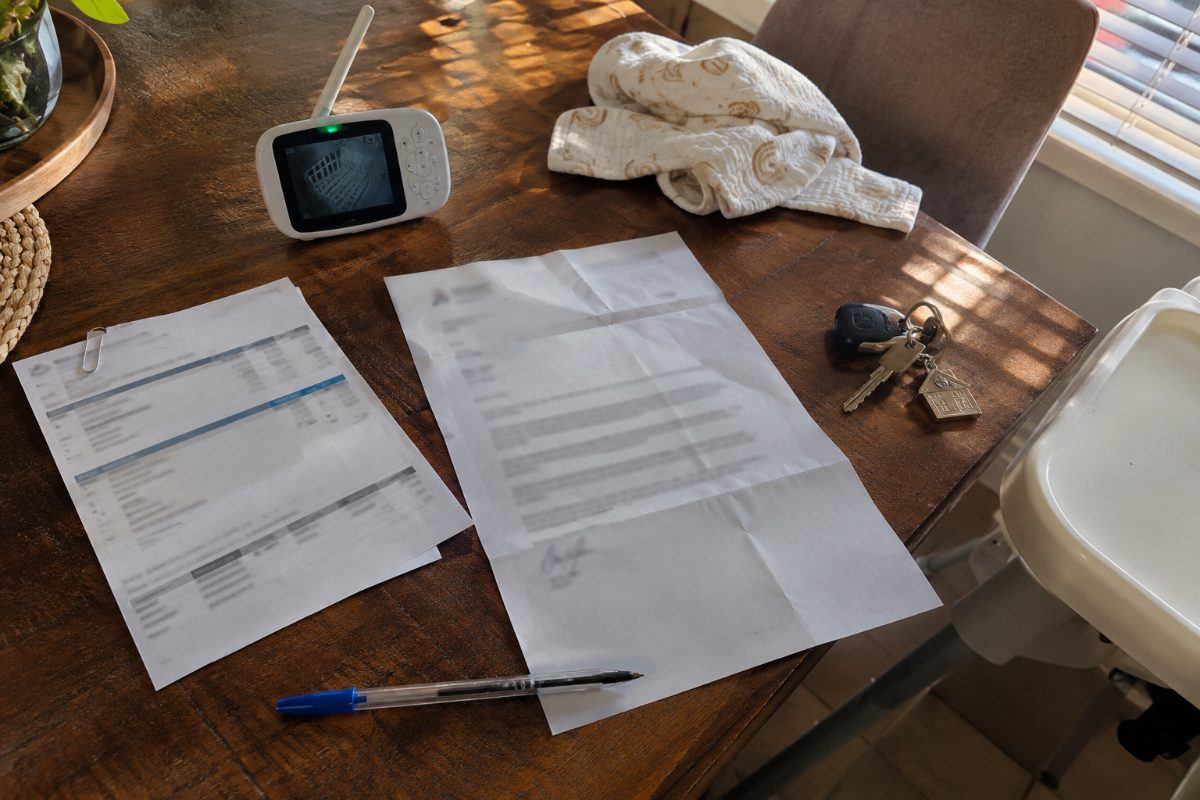
The key document is a return-to-work letter from your employer. It should be:
- On company letterhead showing the employer’s ABN or ACN
- Signed and dated by HR or your manager, ideally within the last 30 to 60 days (some lenders want under four weeks)
- Clear on your role, employment type (permanent full-time or part-time), start date with the employer and leave start date
- Specific about your confirmed return date, return hours and gross annual salary on return
- Clear on any paid leave you’re receiving and when it ends
You’ll usually also need:
- Two recent payslips from before your leave started
- Your latest tax return or PAYG summary
- Payslips or statements showing parental leave pay (from your employer or Services Australia)
- Bank statements proving your savings buffer
- A household budget, including expected childcare costs
Some lenders will accept an employer phone call or email, a Centrelink letter, or payslips in place of a formal letter.
How much savings you need to cover the income shortfall
Many lenders will only approve you if you hold enough savings to cover the gap between your leave income and your commitments until you return. That buffer can sit in a savings account, an offset account or redraw. Here’s how to work it out:
| Item | Monthly |
|---|---|
| Household take-home pay during leave | $6,000 |
| Home loan repayments | $3,000 |
| Living costs (including baby and childcare) | $4,000 |
| Shortfall | $1,000 |
Example only. Assumes six months until the return to work and no change in household income during that time.
With six months to go until you return, you’d need at least $6,000 in accessible savings to cover the gap. Lenders will also expect you to have planned for future childcare costs. Six months, $6,000. That’s the number to have ready.
When refinancing, lenders usually accept money already sitting in your offset account or available in redraw as part of your buffer. It doesn’t need to be in a separate savings account, it just has to be money you can withdraw at any time.
If you’re a first home buyer, your deposit can’t double as your buffer. Lenders look at what’s left in your accounts after settlement, once the deposit, stamp duty, legal fees and any lenders mortgage insurance are paid. If that doesn’t cover the shortfall, you may need to save for longer, borrow a little less, or use a smaller deposit with LMI to keep more cash on hand.
Planning for a baby? The best time to refinance
The best time to refinance is before you go on leave, while you’re still earning your full salary. Your payslips show your normal income, every lender is open to you, and you avoid chasing paperwork with a newborn. A rough timeline:
- Trying for a baby or early pregnancy: Compare rates and refinance now if you want a better rate, an offset account or a repayment pause feature.
- Second trimester: The last comfortable window. Lenders don’t generally ask whether you’re pregnant, but you must answer honestly if asked about upcoming changes to your income.
- On leave: Still possible, but expect fewer lenders to choose from, an employer letter and a savings buffer.
- Back at work: Some lenders want two payslips, or a few months back at work, before they treat your income as normal again. Plan for that lag.
Ways to ease repayments while one income is down
If money is tight while you or your partner is off work, ask your lender about these options. Each lowers repayments in the short term, but most add to the total interest you pay.

| Option | How it works | Trade-off |
|---|---|---|
| Interest-only for up to 12 months | Pay only interest while on leave, then switch back to principal and interest | Loan balance doesn’t fall; repayments rise when it ends; IO rates can be higher |
| Parental leave repayment pause | Stop repayments for an agreed period, usually 3 to 12 months | Interest keeps accruing and is added to the loan; usually needs a clean repayment history and 12 months with the lender |
| Use your redraw or offset | Draw on extra repayments you’ve already made, or let your offset balance cover repayments | Shrinks your buffer; less interest saved |
| Extend your loan term | Spread the remaining balance over more years | Lower repayments but more interest overall |
| Hardship assistance | A formal arrangement if you can’t meet repayments | May be noted on your credit report for 12 months |
Some lenders have a set parental leave option for a loan you already hold:
- Westpac Parental Leave Mortgage Repayment Reduction: cut repayments by up to 50% for up to 12 months if you’ve held the loan for over 12 months; variable loans only, and you must owe no more than 90% of the property’s value (details)
- Bank Australia Parental Pause: pause repayments for three months or halve them for six; loan held for at least 12 months; excludes interest-only, bridging and home equity loans (details)
- Teachers Mutual Bank: pause of up to six months on variable home loans after the first 12 months, for leave from work (details)
A common approach: switch to interest-only for 12 months while the primary carer is on leave, keep any spare cash in an offset, then go back to principal and interest once both incomes are back.
What to do next
If you’re planning leave in the next year, talk to a broker before your income drops. Compare the best mortgage brokers in Sydney, Melbourne or Brisbane, and run your numbers through our home loan calculators first so you know your shortfall.
FAQs about getting a mortgage on parental leave
Can I refinance on unpaid maternity leave?
Some lenders will do it. You’ll need a confirmed return date and enough savings to cover repayments and living costs until you’re back at work. Fewer lenders accept long unpaid periods, and some won’t count any income for the unpaid stretch, so a broker can point you to lenders that assess your return-to-work salary instead.
Do I have to tell the lender I’m pregnant?
Lenders don’t generally ask whether you’re pregnant, but you must answer honestly about any known changes to your income or employment. Hiding planned leave can breach the declaration you sign on your application. Being upfront also lets your broker choose a lender whose parental leave policy suits your timing.
Can I refinance on paternity leave or partner leave?
Lender parental leave policies cover any parent on leave, including dads, non-birth partners and adoptive parents. Short partner leave of a few weeks rarely affects an application, but longer leave, or both parents off at once, brings the same requirements: an employer letter, a confirmed return date and a savings buffer.
Does Parental Leave Pay count as income?
It depends on the lender. Some count government and employer-paid leave in full, others count only part of it, and some ignore it in favour of your return-to-work salary. Because Parental Leave Pay is $1,004.70 a week, usually well below a normal salary, lenders that use your return income tend to give you more borrowing power.
What if I’m going back part-time?
Lenders assess the salary you’ll actually earn when you return, so a part-time figure is what counts. Your employer letter must clearly state your new hours, days and gross pay, and some lenders ask for a payslip once you’re back. Lenders will also add childcare costs to your expenses.
Can I get a home loan on maternity leave if I’m casual or self-employed?
It’s harder, but not impossible. A few lenders accept casual employees on parental leave if the leave is paid and they’ve worked regular hours with the same employer. Self-employed borrowers are assessed on business financials and tax returns, so lenders will want to see the business can keep running while you’re on leave.
Sources
- Services Australia, How much Parental Leave Pay you can get (updated 1 July 2026)
- Services Australia, About Parental Leave Pay payments (updated 1 July 2026)
- Fair Work Ombudsman, Maternity and parental leave
- Fair Work Ombudsman, Minimum wages (2026 Annual Wage Review)
- Lender policy pages and broker guides are linked in the lender table and the repayment-pause list
Megan Birot, Content Editor, OurTop10
Megan holds a Certificate IV in Finance and Mortgage Broking (FNS40821) and a Diploma of Finance and Mortgage Broking Management (FNS50322). She writes and reviews OurTop10’s home loan guides and research reports.