
Until borrowing capacity improves, this divide is likely to persist, meaning where buyers can afford to buy matters more than where they want to buy.
Sydney property market forecasts 2026 and 2027
All four big banks now expect Sydney prices to finish 2026 lower. Each has cut its forecast more than once this year, and they report in different ways, so the table shows each bank’s latest published call and when it was made.
Bank | Latest call | Published |
CBA | Sydney to fall about 16% from peak to trough, with the market steadying in the second half of 2027 | 3 November 2026 |
Westpac | Sydney to fall 12% over 2026. National prices to rise 2% in 2027 | October 2026 |
NAB | No Sydney figure. Capital cities to fall 9% over 2026 and about 14% from peak to trough, with a floor likely in mid-2027 | November 2026 |
ANZ | Sydney to fall 9.9% over 2026 and a further 2.9% in 2027, or 14.5% from peak to trough | 11 August 2026 |
Source: CBA, Westpac, NAB and ANZ economics teams. Bank forecasts change often.
Best suburbs in Sydney for capital growth: the 2026 numbers
Sydney prices are falling in 2026, so this is not a list of suburbs tipped to rise this year. It shows where the long-run drivers sit: steady buyer demand, tight supply and relative value. Each suburb lists its median sale price and how that median moved over the past 12 months. A handful of sales can swing one suburb’s figure, so treat the numbers as a guide.
Growth Tier ($2M-$2.5M)
These suburbs are seeing solid demand from upgraders and first-home buyers priced out of inner Sydney. They offer a mix of relative affordability, gentrification, and infrastructure upside.
Marrickville
Median house price: $2,120,000
12-month change: −0.3% (to August 2026)
A gentrified inner-west hotspot with strong lifestyle appeal and limited supply. Continued demand from young professionals and families is supporting steady growth.
Dulwich Hill
Median house price: $2,445,000
12-month change: +4.0% (to August 2026)
Benefiting from light rail and transport upgrades, Dulwich Hill offers relative value within the Inner West. Strong owner-occupier demand is driving consistent price growth.
Canterbury
Median house price: $2,131,500
12-month change: +14.8% (to August 2026)
An evolving suburb with ongoing redevelopment and improved infrastructure. Its affordability relative to neighbouring suburbs is attracting first-home buyers and investors.
Ashfield
Median house price: $2,225,000
12-month change: −2.6% (to August 2026)
A well-established Inner West suburb with strong transport links and cultural appeal. Stable demand and proximity to the CBD continue to underpin growth.
Campsie
Median house price: $2,050,000
12-month change: +15.8% (to August 2026)
A more affordable Inner West option undergoing gradual gentrification. Improved amenities and strong rental demand are helping drive above-average growth potential.
Value Tier ($1M-$1.3M)
This is where the bulk of demand is concentrated in 2026. With borrowing capacity under pressure, buyers are being pushed into more affordable suburbs, particularly in Western Sydney and parts of the South-West. As a result, these areas are holding up best and, in some cases, still seeing solid growth.
Mount Druitt
Median house price: $1,102,500
12-month change: +10.7% (to August 2026)
A key entry-level suburb attracting first-home buyers and investors. Strong rental demand and proximity to infrastructure projects are supporting above-average growth potential.
St Marys
Median house price: $1,200,000
12-month change: +13.8% (to August 2026)
One of the biggest beneficiaries of the Western Sydney Airport and Metro upgrades. Tight supply and rising demand are positioning St Marys as a standout growth suburb.
Blacktown
Median house price: $1,170,500
12-month change: +8.4% (to August 2026)
A major Western Sydney hub with strong population growth and infrastructure investment. Consistent buyer demand is helping support steady price appreciation.
Liverpool
Median house price: $1,280,000
12-month change: +7.6% (to August 2026)
A rapidly developing centre with strong transport links and employment hubs. High rental demand and ongoing development are key drivers of growth.
Campbelltown
Median house price: $1,025,000
12-month change: +9.0% (to August 2026)
One of Sydney’s most affordable markets with significant long-term upside. Population growth, infrastructure investment, and affordability are driving strong buyer interest.
Best Sydney suburbs for young professionals in 2026
Surry Hills
Median unit price: $848,750
12-month change: −7.7% (to August 2026)
A high-demand inner-city suburb known for its café, dining, and nightlife scene. Strong rental demand and walkability continue to support steady price growth.
Zetland
Median unit price: $960,000
12-month change: −5.0% (to August 2026)
A fast-growing apartment precinct with modern developments and retail hubs. Popular with young buyers and renters, driving above-average demand and growth.
Newtown
Median house price: $1,900,000
12-month change: +0.1% (to August 2026)
A vibrant inner-west suburb with strong cultural appeal and nightlife. Consistent demand from young professionals supports long-term growth and rental demand.
Alexandria
Median house price: $2,300,000
12-month change: +7.0% (to August 2026)
A gentrified inner-south suburb blending lifestyle and convenience. Ongoing development and proximity to the CBD are driving strong buyer interest.
Darlinghurst
Median unit price: $990,000
12-month change: +3.1% (to August 2026)
A vibrant inner-city suburb known for its nightlife, dining, and proximity to the CBD. Popular with young professionals, strong rental demand and walkability continue to support steady growth.
Best suburbs in Sydney for lifestyle & community in 2026
Best Inner West Sydney suburbs
The Inner West remains one of Sydney’s most sought-after regions for lifestyle and community in 2026, known for its village feel, café culture, and strong sense of identity.
Summer Hill
Median house price: $2,475,000
12-month change: −1.0% (to August 2026)
A tightly held suburb with a strong village feel, heritage homes, and a thriving local café strip. Limited supply and strong owner-occupier demand are supporting steady growth.
Petersham
Median house price: $2,085,000
12-month change: −4.7% (to August 2026)
Known for its Portuguese dining scene and community vibe, Petersham offers Inner West lifestyle at a slight discount to neighbouring hotspots. Ongoing gentrification is driving consistent demand.
Enmore
Median house price: $1,959,000
12-month change: +8.8% (to July 2026)
A tightly held suburb right next to Newtown, known for its live music scene and village feel. Limited supply and strong demand from young professionals continue to support steady price growth.
Balmain
Median house price: $2,725,000
12-month change: −4.5% (to August 2026)
A harbour-side suburb with a strong village atmosphere and heritage appeal. Tightly held homes and proximity to the CBD support long-term growth.
Leichhardt
Median house price: $2,150,000
12-month change: +2.2% (to August 2026)
A well-established Inner West suburb known for its Italian heritage, dining scene, and family appeal. Consistent demand and strong community feel drive stable growth.
Best Sydney North Shore & Northern Beaches suburbs
The North Shore and Northern Beaches offer some of Sydney’s most desirable lifestyle suburbs, combining natural beauty, strong community feel, and excellent schools. This makes them especially popular with families and upgraders.
Lane Cove
Median house price: $3,188,000
12-month change: −3.2% (to August 2026)
A lower north shore favourite with a strong village feel, leafy streets, and excellent schools. High owner-occupier demand continues to support steady growth.
Willoughby
Median house price: $3,675,000
12-month change: +3.2% (to August 2026)
A family-oriented suburb with great schools and proximity to the CBD. Its balance of space, convenience, and lifestyle underpins consistent demand.
Manly Vale
Median house price: $2,775,000
12-month change: −3.3% (to August 2026)
Offering beachside proximity without Manly price tags, Manly Vale is attracting buyers seeking lifestyle and relative value. Demand remains strong from families and professionals.
Dee Why
Median house price: $2,495,000
12-month change: −13.7% (to August 2026)
A Northern Beaches hub with strong lifestyle appeal, beaches, and a growing dining scene. Its relative affordability and rental demand are supporting growth.
Sydney Eastern Suburbs
Sydney’s Eastern Suburbs remain some of the most desirable places to live, combining coastal lifestyle, strong community feel, and proximity to the CBD. These suburbs continue to attract both families and professionals seeking long-term lifestyle appeal.
Randwick
Median house price: $3,800,000
12-month change: +2.7% (to August 2026)
A well-rounded suburb offering beaches, parks, and major employment hubs. Strong owner-occupier demand and limited supply support steady growth.
Coogee
Median house price: $5,050,000
12-month change: +16.8% (to August 2026)
A tightly held beachside suburb with enduring lifestyle appeal. Limited supply and strong demand from both locals and expats underpin long-term growth.
Maroubra
Median house price: $2,917,500
12-month change: −2.8% (to August 2026)
Offering coastal living at a relative discount to its neighbours, Maroubra is attracting families and upgraders. Strong demand and lifestyle appeal support consistent growth.
Waverley
Median house price: $4,280,000
12-month change: +1.4% (to August 2026)
A premium suburb with excellent schools and proximity to Bondi Junction. High owner-occupier demand and limited stock support stable growth.
Rose Bay
Median house price: $7,039,888
12-month change: +34.9% (to July 2026)
A prestige harbour-side suburb with strong family appeal and lifestyle benefits. While more cyclical, long-term growth is supported by scarcity and high demand.
Suburb medians and 12-month changes are from Your Investment Property suburb reports, based on sales to August 2026 (July 2026 for Enmore and Rose Bay). They show past results, not forecasts.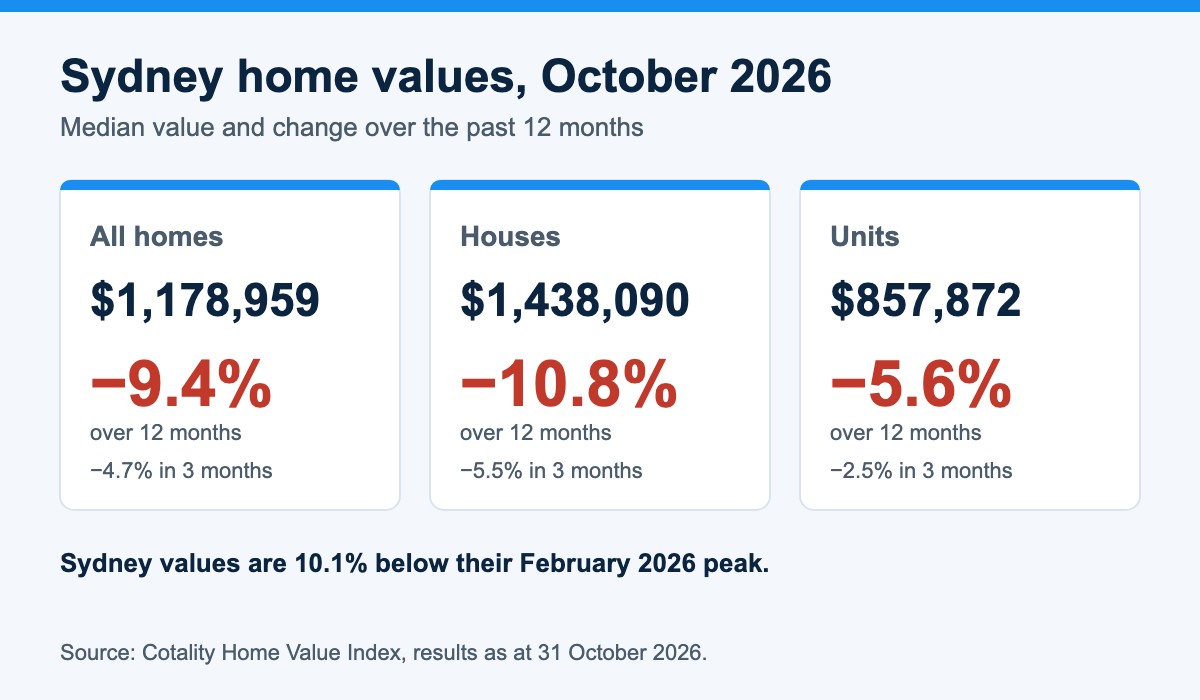
Economic risks affecting the Sydney property market in 2026
The broader economic environment is playing a more visible role in shaping property
conditions in 2026. Inflation remains above target, cost-of-living pressures continue to affect households, and there’s increasing discussion around the potential for slower economic growth. At the same time, global events, including ongoing conflict in the Middle East, are contributing to uncertainty around energy prices and inflation. These factors do not point to immediate instability, but they do create a more fragile backdrop for the market.
What should you do in this market?
For buyers
Secure borrowing capacity early to understand your limits
Focus on loan structure, not just headline rates
Target segments where competition has eased
For sellers
Price realistically based on current market conditions
Expect negotiation as part of the process
Invest in presentation to maximise buyer interest.
FAQs: Sydney Property Market 2026
Is the Sydney property market going up or down in 2026?
Down. Sydney home values fell 4.7% in the three months to October 2026 and sit 10.1% below their February 2026 peak, on the Cotality Home Value Index.
Five interest rate rises this year have cut how much buyers can borrow, and houses have fallen about twice as fast as units. All four big banks expect prices to finish the year lower.
Is now a good time to buy property in Sydney?
For prepared buyers, current conditions offer more negotiating power than in previous years, with less competition from middle-income buyers who have been priced out by higher interest rates.
If inflation continues to ease and rates stabilise, buyer confidence is likely to improve, supporting more consistent activity. If rates remain elevated, the current pattern of selective demand and uneven performance is likely to continue.
How are interest rates affecting the Sydney property market?
Higher interest rates are pushing Sydney prices down by cutting how much buyers can borrow. The cash rate has risen five times in 2026, to 4.85%, and Sydney home values have fallen 10.1% from their peak, with houses falling faster than units.