
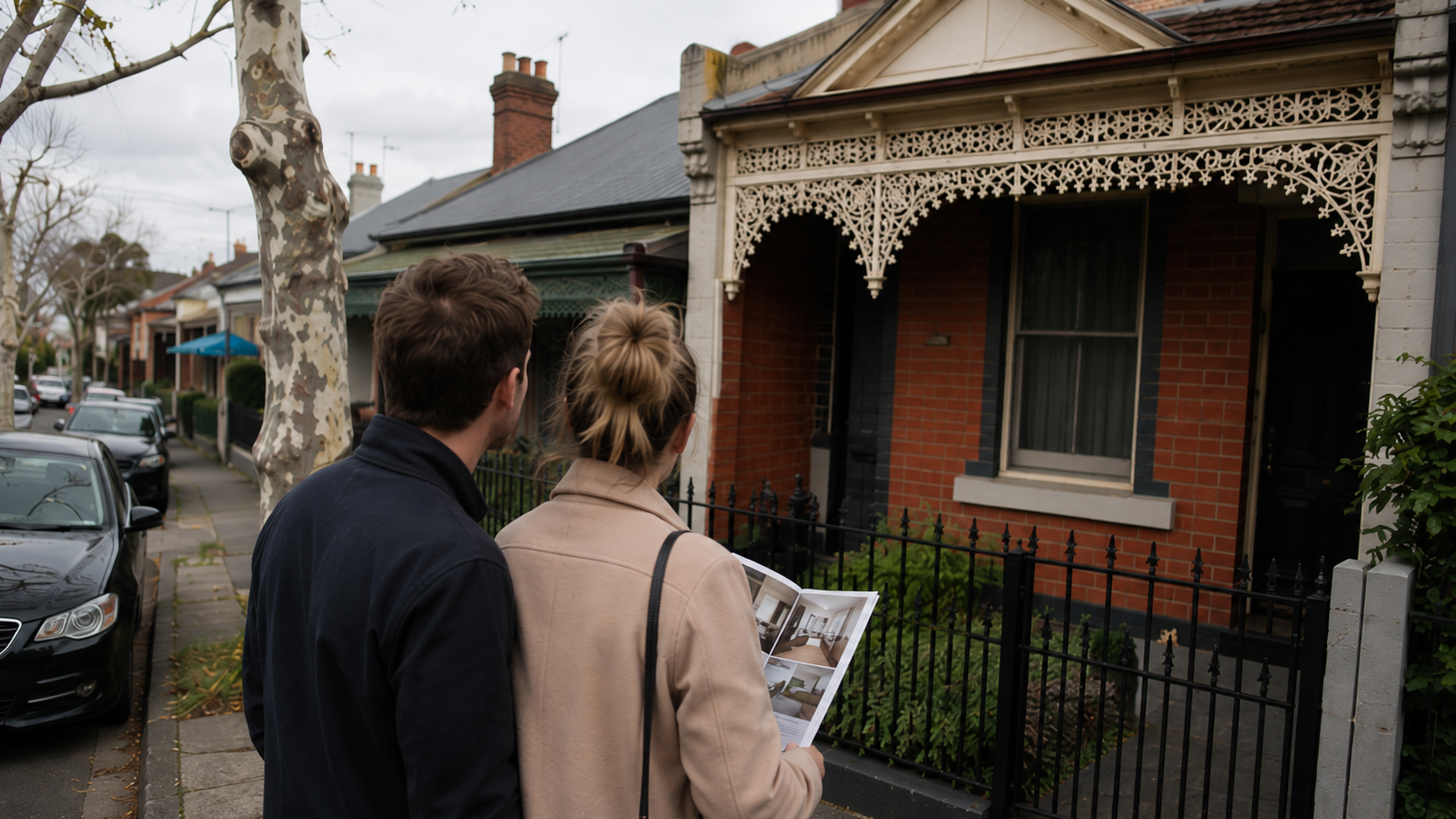
Free download
The First Home Buyer’s Complete Guide
Every step from checking your credit score to collecting the keys — 40 pages, written for Australian first home buyers.
Four out of five new home loans in Australia now go through a broker. The MFAA put broker market share at a record 81% for the March 2026 quarter, with $124.88 billion in loans settled through brokers in those three months alone. First home buyers lean on brokers more than anyone, for an obvious reason. Everyone else in the transaction has done this before, and you haven’t.
That doesn’t mean every broker is worth your time. Some of them will change what you’re able to buy. Others are really just collecting leads, and working out which is which takes about ten minutes if you know what to ask.
The short answer
No, you don’t need one. You can apply to a bank directly and plenty of people do.
What you give up by going direct is options. A bank can only sell you its own loans. Say your situation doesn’t quite fit its credit policy. Eight months in the job, a deposit your parents helped with, casual income, a HECS balance eating into your borrowing power. That bank says no, and you start again somewhere else. Every fresh application puts an enquiry on your credit file, and lenders notice a pile of them.
A broker tests your scenario against a panel of 30 or more lenders before anything touches your file, so you find that out without collecting knockbacks along the way. We weigh the two paths properly in our mortgage broker vs bank comparison. This guide sticks to what matters for a first purchase.
The other reason first-timers use brokers is translation. Pre-approval windows, lenders mortgage insurance, the government guarantee, stamp duty concessions that change the moment you cross a state border. A working broker handles this every week. You’ll go through it once, maybe twice, in your life.
What a broker costs you: usually nothing

The lender that ends up writing your loan pays the broker. That’s an upfront commission, commonly around 0.65% of the loan amount, plus a small ongoing trail. That comes out of the lender’s margin rather than your pocket, and it doesn’t get loaded onto your rate.
Some brokers do charge a fee for service on complicated lending. On a standard first home purchase that’s unusual, so if a broker wants one, ask exactly what it buys you before you sign anything.
Since 2020 brokers have been legally required to act in your best interests when recommending a loan. The person at the bank selling you the bank’s own product carries no such duty.
The rules changed in late 2025 — a current broker will know them cold

A lot of what Google serves up about first home buyer schemes is out of date, because the big changes only landed on 1 October 2025. Under the expanded First Home Guarantee there are now no income caps and no limit on places: any eligible first home buyer can purchase with a 5% deposit and skip lenders mortgage insurance entirely, on properties up to $1.5 million in Sydney and the major NSW regional centres, $950,000 in Melbourne and Geelong, and $1 million in Brisbane, the Gold Coast and the Sunshine Coast. Smaller regional areas sit on lower caps set by postcode, so check the cap for the suburb you’re targeting before you sign. Skipping LMI on a $1 million purchase with a 5% deposit avoids an up-front premium of roughly $34,000. We cover eligibility and the fine print in our First Home Guarantee scheme guide.
There are two catches, and they are where a broker earns the fee you aren’t paying. Not every lender participates in the scheme, and the ones that do still assess you on their normal credit policy. A broker who writes these loans every month knows which lenders move fast, which are fussy about gifted deposits, and which will look at a 5% application twice.
“There’s a misconception going around that the 5% deposit scheme means any bank will now lend to you on 5%. It doesn’t work like that. Not every lender offers it, and the ones that do still put you through their normal credit assessment. So it comes down to finding a lender that’s in the scheme and is also comfortable with your particular circumstances.”
— James Haywood, Approved Finance

Stamp duty is a separate question, and every state treats first home buyers differently. Full exemptions in some price brackets, concessions in others. Queensland currently charges nothing at all on new builds for first home buyers. Run your numbers through our stamp duty calculator and see our first home buyer stamp duty guide for your state’s thresholds.
What a good broker actually does for a first home buyer
A decent broker’s job starts well before the loan application:
- A borrowing-power reality check before you fall in love with a place you can’t finance.
- Structuring the application to fit lender policy. Probation periods, casual or contract income, gifted deposits, how each lender treats your HECS balance. Present the same facts to the right lender and you get a different answer.
- Getting you into the guarantee scheme with a participating lender, and telling you honestly if you’re better off outside it.
- Timing your pre-approval so it doesn’t expire while you’re still losing auctions. Most pre-approvals last about 90 days.
- Driving the file to settlement. Chasing the lender, coordinating with your conveyancer, making sure finance is unconditional before your deadline passes.
“Most first home buyers ring up asking who’s got the cheapest rate. The bigger question is which lender is actually going to approve them, because that varies enormously. Probation periods, a deposit the parents have chipped in on, a HECS debt. Some lenders barely blink at those and others won’t touch them. A knockback from one bank usually tells you more about that bank than about the borrower.”
— Austin Rulfs, Director, Zanda Wealth Mortgage

How to pick one, as a first home buyer
The general rules are covered in our guide to the mistakes people make choosing a mortgage broker: licences, reading reviews properly, commission structures. For a first purchase specifically, three questions do most of the work:
- “How many first home buyer loans have you written under the scheme since October 2025?” The rules are still fairly new, and you want someone who has already run this route a few times rather than someone reading the Housing Australia website while you sit there.
- “How many lenders did you actually use last year?” Being accredited with 40 lenders doesn’t count for much if 90% of their loans go to the same three. You learn a lot from how honestly they answer this one.
- “If my borrowing power comes back short, what would you change?” A good broker will explain what’s driving the number and what would move it, whether that’s closing a credit card, clearing a car loan, or simply waiting another three months in the job.
And walk away from anyone promising “guaranteed approval”, or who goes vague when you ask how they’re paid.
Where to start looking
If someone you know bought in the last year or two, ask them who they used. Past that, shortlist two or three brokers and put the questions above to each of them. We keep ranked, regularly reviewed lists of the best mortgage brokers in Sydney, the top-rated mortgage brokers in Melbourne and Brisbane’s best mortgage brokers — each entry covers who the broker suits and what their reviews actually say. Buying elsewhere? Start with our guide to mortgage brokers across Australia.
Free download
The First Home Buyer’s Complete Guide
Every step from checking your credit score to collecting the keys — 40 pages, written for Australian first home buyers.
Quick answers
Are mortgage brokers free for first home buyers?
Almost always. The lender pays the broker’s commission; you pay nothing directly. Confirm it in writing before you start. Any fee has to be disclosed up front.
Can a broker get a better rate than my bank?
Often, though not always. There is no magic pricing involved. A broker compares 30-plus lenders’ rates and negotiates with the one that wants your business, while your bank only offers its own book. See our guide to the best home loans for first home buyers for what’s on offer.
How long does pre-approval take?
Anywhere from a couple of days to a few weeks depending on the lender and how complete your paperwork is. A broker who knows current turnaround times will steer you away from lenders running six-week queues.
Do I still need a 20% deposit?
No. With the expanded First Home Guarantee you can buy with 5% and no LMI, subject to the price caps above. Outside the scheme, most lenders accept less than 20% if you pay LMI or have a guarantor.